A few years ago, if you told a Java team that an AI tool could open a pull request, a lot of people would treat that as the finish line.
To be honest, I never saw it that way.
Opening a pull request is the easy part. The hard part is everything that comes after it. Review. Security. Repository rules. Build setup. The boring stuff. And in real teams, especially in enterprise Java, that boring stuff is exactly where trust is won or lost.
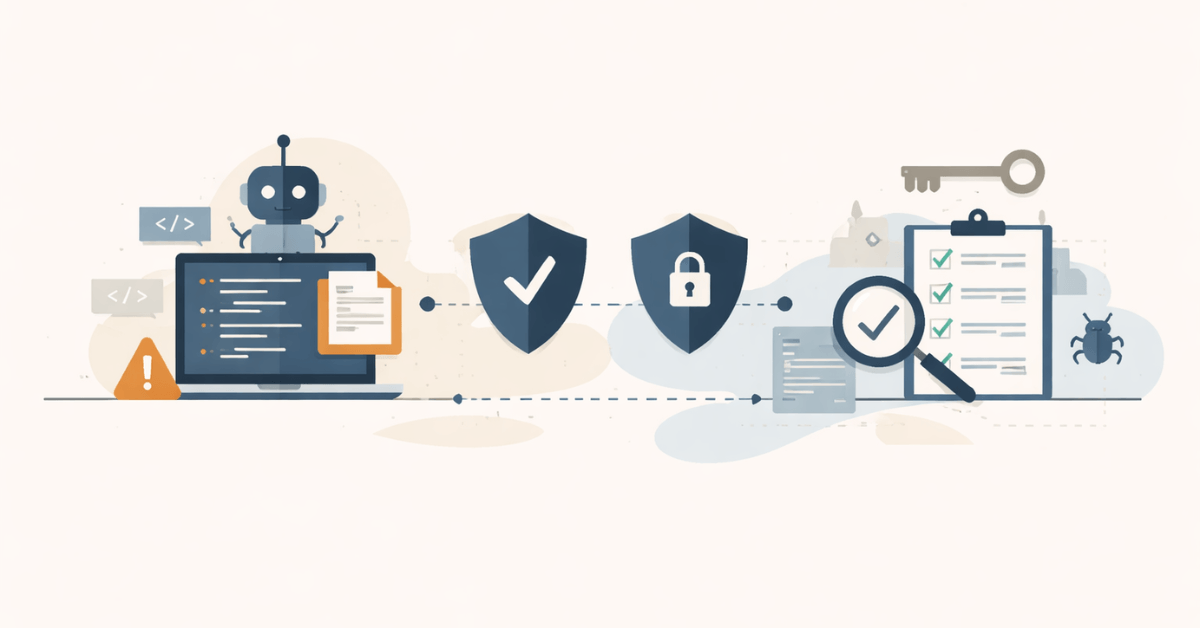
That is why GitHub’s March 18 update caught my attention. The headline was simple: repository admins can now configure which validation tools Copilot coding agent runs, including code review, code scanning, the GitHub Advisory Database, and secret scanning.
At first glance, that sounds like a settings page update. In practice, it is more important than a model bump.
Because the conversation starts moving away from “look what the agent can generate” and toward “under which controls is this thing allowed to work?”
And, honestly, that is a much better conversation for Java teams.
The interesting part is not autonomy. It is boundary.
GitHub documents Copilot coding agent as a background workflow that can take a task, work in an ephemeral development environment powered by GitHub Actions, make changes, and open a pull request for review.
That matters, but not for the reason many people think.
The point is not that the agent is acting like a magical developer. The point is that GitHub is placing that behavior inside a pull request workflow, with logs, checks, and review steps that teams already understand.
That is a healthier frame.
Java teams do not usually struggle because they lack code generation. They struggle because any change that touches a real service has consequences. A generated patch can look clean and still violate architectural boundaries, security expectations, naming conventions, test assumptions, or operational discipline.
So when GitHub adds configurable validation tools at the repository level, the product gets more serious.
Not because the agent became wiser overnight.
Because the repository gets a stronger say in what “acceptable output” means.
This matters more in Java than many AI demos want to admit
I have said this before in conversations with devs: Java projects are rarely toy projects for long.
They become systems with integration points, support rotations, compliance pressure, slow-moving dependencies, and teams that do not have the luxury of being surprised in production.
That is why the new validation controls land differently here.
If a coding agent writes code for a small experimental app, you can tolerate a lot of guesswork.
If it writes code inside a Java repository that carries business-critical traffic, guesswork gets expensive very fast.
GitHub’s own documentation quietly reinforces this. The coding agent works in an ephemeral environment. It can run tests and linters. And GitHub lets you customize that environment through a .github/workflows/copilot-setup-steps.yml file.
That file has to define a single copilot-setup-steps job, and those steps run before the agent starts working.
I like that detail because it exposes the real operational issue. Build setup should not depend on the agent “figuring things out.”
GitHub says this quite directly: Copilot can try to discover and install dependencies by trial and error, but that can be slow and unreliable because of the non-deterministic nature of LLMs.
That line says a lot.
In plain English: if your repository needs structure, give it structure.
And Java repositories usually do.
The real upgrade is from the demo workflow to the governed workflow
The March 18 update names four validation tools that repository admins can configure for the coding agent:
- code review (Copilot code review)
- code scanning (CodeQL)
- advisory database (GitHub Advisory Database)
- secret scanning
That trio matters because it maps to the real anxieties teams have.
Code review keeps human judgment where it belongs
GitHub documents Copilot code review as a feature that reviews pull requests and leaves comments with suggestions. It can technically submit an approval, but that approval does not count as a formal merge requirement — it does not satisfy branch protection rules or replace a human approver.
Good.
That means the tool can widen coverage without pretending to replace engineering judgment.
For Java teams, that is the right balance. Let automation find the obvious stuff early. Let humans spend their energy on architectural impact, domain correctness, and risk.
Code scanning gives generated changes a security checkpoint
GitHub documents CodeQL as the analysis engine behind GitHub code scanning for vulnerabilities and errors.
That is a big deal.
AI-generated code does not need to be malicious to be dangerous. It just needs to be plausible enough to pass a casual read while introducing a bad pattern.
A security scan in the pull request path does not solve everything, but it changes where you fail. And failing before merge is a lot better than failing after release.
Secret scanning closes one very ugly class of mistake
This one is more practical than glamorous.
GitHub documents secret scanning as a way to detect credentials and other secrets committed to repositories. Coding agents can make that kind of mistake without any bad intent at all. A copied config, a test fixture, an example value, an accidentally preserved token, and there you go.
If you work in Java systems that touch databases, messaging, cloud services, internal APIs, or vendor integrations, you already know how messy configuration reality can get.
So yes, this validation belongs in the conversation.
Repository design now matters even more
Here is the trap.
A team sees these new validation controls and thinks, “Great, now we can let the agent loose.”
I would slow down.
What this update really does is reward repositories that are already disciplined enough to define how work should happen.
GitHub’s best practices material points in that direction. The company recommends well-scoped tasks, clear acceptance criteria, and custom instructions that explain how to build, test, and validate changes. Those instructions can live in places such as .github/copilot-instructions.md, .github/instructions/**/*.instructions.md, AGENTS.md, CLAUDE.md, and GEMINI.md.
That is not prompt theater. That is repository literacy.
And if you ask me, a Java team that wants useful output from coding agents should make at least four things painfully explicit:
- How the project builds
- Which tests and checks are non-negotiable
- Which conventions should never be inferred
- Which kinds of work should stay away from the agent
GitHub also advises caution with broad, ambiguous, production-critical, or security-sensitive work.
Again, good.
That is not fear. That is grown-up engineering.
What Java teams should do next
I do not think this update means “adopt agents everywhere.”
I think it means something better.
It means Java teams can start evaluating coding agents with a more honest checklist.
Not “is the model impressive?”
But questions like these:
- Is our repository deterministic enough for an agent to work safely?
- Are our review and security checks enabled where they should be?
- Are the tasks small and clear enough to avoid interpretation games?
- Do we still have humans reviewing the result as code, not as magic?
If the answer is no, the bottleneck is not intelligence.
It is the process.
And that is exactly why this GitHub update matters. It nudges the industry away from the fantasy of autonomous coding and toward something much more useful: governed coding.
For Java teams, that is where real adoption starts.
Sources
- https://github.blog/changelog/2026-03-18-configure-copilot-coding-agents-validation-tools/
- https://docs.github.com/en/copilot/concepts/agents/coding-agent/about-coding-agent
- https://docs.github.com/en/copilot/how-tos/use-copilot-agents/coding-agent/customize-the-agent-environment
- https://docs.github.com/en/copilot/concepts/agents/code-review
- https://docs.github.com/en/code-security/code-scanning/introduction-to-code-scanning/about-code-scanning-with-codeql
- https://docs.github.com/en/code-security/secret-scanning/introduction/about-secret-scanning